
FxPro Raw+ Live Spreads — Measured, Not Advertised — FxPro Kenya 2026
Real spreads we recorded on FxPro’s own MetaTrader 5 Raw+ feed — 6 instruments, 3,714,831 ticks sampled, last captured 2026-09-15. The spread you actually trade on, not a marketing ‘from 0.0’.
Open FxPro Account →Every cash figure on this page is a US dollar figure, and that is a property of the account behind the feed rather than of the pricing: these readings come from one live Raw+ account, and that account is denominated in US dollars. Two questions follow and they have different answers. Is the spread itself a dollar thing? No - a spread is a distance between two prices, so it reads the same whatever unit your balance is kept in. Is the cost a dollar thing? Yes, because a cost is money and money always carries a denomination. Read the tables along that seam: the pip columns arrive unchanged at any account, the cash columns arrive only after a currency step, and on several instruments that step happens even when the account itself is in dollars.
This is the live, hour-by-hour measured spread feed (refreshed daily). For the Standard vs Raw+ cost comparison and fees, see our spreads & costs page.
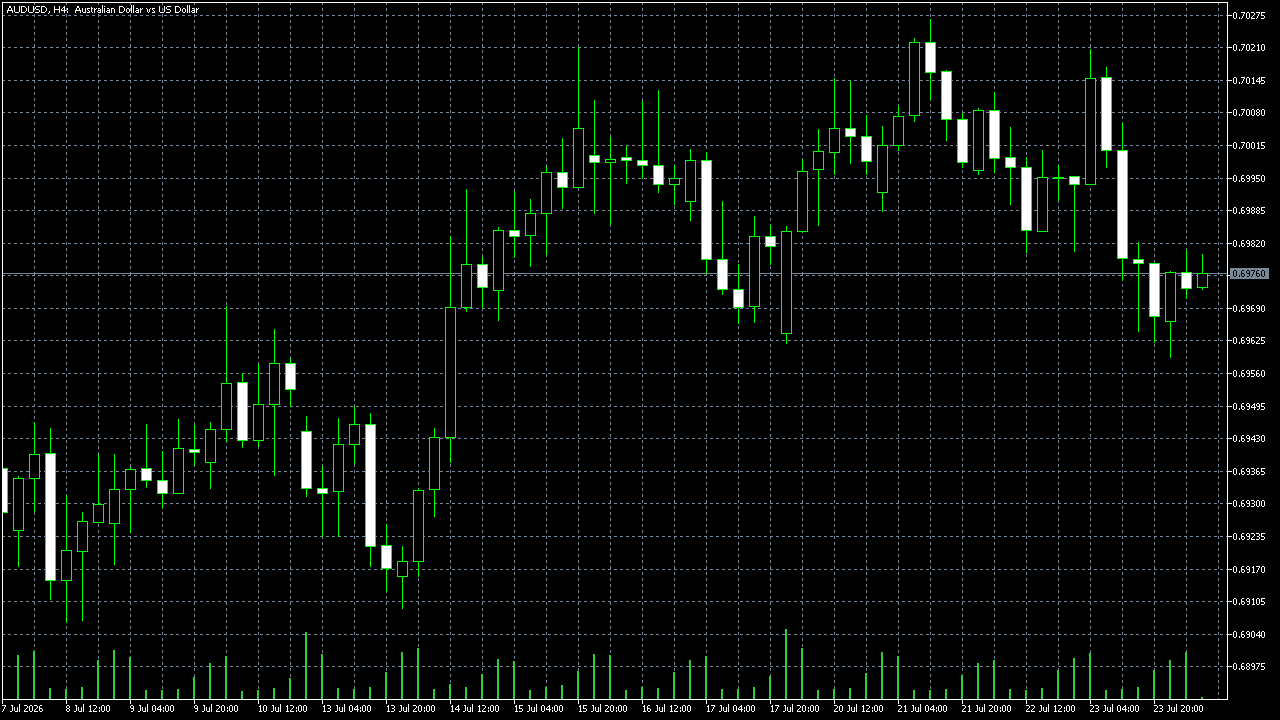
Measured Raw+ spreads (pips)
| Instrument | Best (min) | Typical (median) | Busy market (p90) | At capture | Ticks sampled |
|---|---|---|---|---|---|
| EUR/USD | 0.1 | 0.2 | 0.2 | 0.2 | 457,098 |
| GBP/USD | 0.6 | 0.6 | 0.6 | 0.6 | 590,492 |
| AUD/USD | 0.2 | 0.4 | 0.8 | 0.4 | 511,715 |
| USD/CAD | 0.1 | 0.4 | 0.5 | 0.4 | 465,429 |
| USD/JPY | 0.3 | 0.3 | 0.5 | 0.3 | 717,421 |
| XAU/USD (Gold) | 15 | 15 | 19 | 15 | 972,676 |
Best = the tightest quiet-market quote we saw; Typical = the median you usually trade; Busy market = the wider spread to expect about 10% of the time (news, rollover, thin liquidity). ‘At capture’ is the live spread at the last reading. Metals such as XAU/USD use a different contract size, so their cash cost is on our gold page. Server FxPro-MT5 Demo, feed 2026.09.15 14:10:41.
Spread through the trading day (measured, last 24h)
| Instrument | Tightest (avg) | Widest (avg) | Worst spike | Through the day |
|---|---|---|---|---|
| EUR/USD | 0.2 (03:00) | 1.782 (00:00) | 9.5 (00:00) | |
| GBP/USD | 0.6 (03:00) | 3.627 (00:00) | 15 (23:00) | |
| AUD/USD | 0.292 (14:00) | 3.98 (00:00) | 25 (23:00) | |
| USD/CAD | 0.292 (09:00) | 2.318 (00:00) | 13.6 (23:00) | |
| USD/JPY | 0.3 (09:00) | 7.082 (00:00) | 16 (23:00) | |
| XAU/USD (Gold) | 15 (09:00) | 75.421 (00:00) | 175 (00:00) |
Table hours are FxPro server time (about UTC+3 / EET); the highlighted guidance above is shown in EAT. Average pip spread by hour over the last 24 hours, with the worst single-tick spike. Spreads run tightest in the peak London–New York overlap and widen around the 00:00 server rollover and the thinner Asian hours — the sparkline is each instrument’s daily shape.
What it costs you per lot (Raw+)
| Instrument | Typical spread | Spread cost / lot | Commission (round turn) | All-in / lot | All-in (pips) |
|---|---|---|---|---|---|
| EUR/USD | 0.2 pips | $2.00 | $7.00 | $9.00 | 0.9 pips |
| GBP/USD | 0.6 pips | $6.00 | $7.00 | $13.00 | 1.3 pips |
| AUD/USD | 0.4 pips | $4.00 | $7.00 | $11.00 | 1.1 pips |
| USD/CAD | 0.4 pips | $2.87 | $7.00 | $9.87 | 1.37 pips |
| USD/JPY | 0.3 pips | $1.94 | $7.00 | $8.94 | 1.38 pips |
| XAU/USD (Gold) | 15 pips | $15.00 | $7.00 | $22.00 | 22 pips |
All-in round-turn cost for one standard lot (100,000 units): typical spread × pip value, plus the $7 Raw+ commission ($3.50 per lot per side ($7.00 round turn) on Raw+ and cTrader accounts). On a Standard account you pay a wider spread instead of that commission — see the full spreads and costs page.
Open FxPro Account →Advertised ‘from 0.0’ vs what we measured
FxPro markets Raw+ as spreads ‘from 0.0 pips’ — a best-case floor. Across our sample the tightest EUR/USD quote we recorded was 0.1 pips and the typical was 0.2 pips. That is normal: the ‘from’ figure is a floor you rarely trade on, so judge a Raw+ account by its typical spread and how far it widens under load (the p90 column), not the headline number.
How we measured this
- Recorded on FxPro's own MetaTrader 5 Raw+ account — the broker's real pricing feed, not a third-party estimate.
- Captured in-terminal by an MQL5 expert advisor that logs every tick's bid and ask, so the spread is exactly what the platform shows.
- 3,714,831 ticks across 6 instruments; the figures refresh on a schedule.
- Demo and live Raw+ share the same pricing feed, so these spreads are representative of a funded account.
Spreads are variable and widen around high-impact news and the daily rollover. Past readings do not guarantee future spreads. Last updated 2026-09-15.
The seam between a pip column and a cash column
The tightest, typical and busy-market columns of the spread table are quoted in pips, and a pip is a property of the instrument rather than of your money. Those columns mean exactly the same thing on every account, whatever unit it is denominated in, and they are the only figures here that need no rate standing behind them. That is worth knowing before anything else on the page, because it tells you which half of a cost you can take at face value.
The cash columns sit on the other side of the seam, and cash always carries a denomination. The commission is the cleanest illustration, because it is the one component the market does not touch: Raw+ charges $3.50 per lot per side, and that is a dollar tariff by definition. A dollar-denominated balance records it unchanged. A balance kept in another unit records the same tariff restated into that unit, which is why two identical trades weeks apart can leave two slightly different entries even though nothing about the tariff moved.
Contract size belongs on the pip side of the seam. One standard lot is 100,000 units on an FX major and 100 ounces on gold, and neither quantity has a denomination of its own. What contract size decides is how large the cash half becomes once the distance is turned into money - which is why a question about currency and a question about size keep arriving together even though they are not the same question.
There is a quick way to tell which side of the seam an instrument falls on: look at the second name in the pair. That is the currency the result arrives in. If it matches the unit the account is kept in, nothing has to be restated. If it does not, one step stands between the result and the balance. The check takes two seconds and it accounts for most of the surprises that get blamed on pricing.
It helps to keep two words apart while reading. A cost can be quoted, and a cost can be charged. What this page does is quote: it reports a distance and what that distance came to on the account the readings were taken on. What an account does is charge, and a charge has to be written down in one particular unit on one particular day. Everything confusing about account currency lives in the gap between those two verbs.
Conversion sits between the instrument and the balance
A closed position produces its result in the currency the instrument itself works in, and only afterwards in the currency of the account. On a pair quoted against the dollar the result is already a dollar amount and nothing further has to happen. On a pair where the dollar is the first name rather than the second, the result appears in the other currency and has to be turned into dollars before it can be added to a dollar balance. So a US dollar account meets a conversion too, routinely, without anyone announcing it - which is the part most explanations of account currency leave out.
The visible fingerprint of that step is the tick value column on our trading conditions page. Some rows come out perfectly round and some carry two awkward decimals that shift a little between captures. The round rows are instruments that already work in the unit the account is kept in, so nothing had to be done to them on the way. The awkward rows reached the column only after a rate was applied to them. Redenominate the same account and the shape of that column is redrawn: tidy rows turn awkward and an awkward one becomes the clean one.
The test generalises to any cost figure you meet, here or elsewhere. A value that comes out round and repeats identically from capture to capture usually means no conversion took place. A value with a trailing decimal that drifts between captures usually means a rate was applied somewhere between the instrument and the balance. Neither is a fault; they are two different distances from the money actually sitting in the account.
The awkward case is the one where neither name in the pair matches the account. The result is then restated through a rate that is nowhere on the chart in front of you: a third price, in a currency you never chose to trade. No column on this page contains it and no window in the platform advertises it, which is exactly why a figure worked out from the pip column and the amount finally recorded against the position can part company slightly without either of them being wrong.
The step also has a direction. Between the moment a position opens and the moment it closes, the unit your account is kept in can move against the currency the instrument works in, so an identical result in the instrument's own terms lands as a slightly larger or slightly smaller figure. The trade did not perform differently. The restatement did, and it did so in whichever direction the two currencies happened to move.
Where the last decimal goes
Each charge is recorded to the smallest unit the account's currency uses, and recorded separately - the spread portion, the commission, the overnight swap - rather than once at the end of the month. A long list of small conversions therefore never reconciles to the last decimal of a pip calculation. The leftover belongs to rounding rather than to the spread, it stays small, and it stays small only while both sides of the comparison cover the same period.
That leftover is also why a cash figure taken from this page and a cash figure sitting in a platform can differ while nothing at all is wrong: two units of account, two rates, two roundings and one identical spread underneath. The way out of that disagreement is to step back to the pip column, where there is nothing to round and nothing to restate.
Currencies differ in how finely they can be rounded, too. A unit carrying two decimals absorbs a conversion differently from one that is normally quoted whole, so the same trade can leave a visibly different leftover on two accounts while the tariff behind it is identical. None of this changes what an instrument costs. It changes only how exactly that cost can be written down.
For the same reason a cost travels between accounts far better as a ratio than as an amount. A spread stated in pips, or a cost stated as a share of the position's notional, means the same thing to every reader of this page. The identical cost stated as a sum of money means one thing on the account it was measured on and something slightly different everywhere else, and it goes out of date on its own without anybody touching a tariff.
So if you carry a figure forward from one month to the next, carry the pip figure. It stays comparable indefinitely, because nothing about it depends on a rate. A cash figure carried forward looks equally solid and quietly stops meaning what it meant, which is the most common way a reader ends up convinced that conditions changed when the only thing that moved was the unit the answer was written in.
Which figures on this page carry a currency
| Figure | Counted in | Restated for a non-dollar balance |
|---|---|---|
| Spread columns | Pips, a distance between two prices | No |
| Contract size | Units of the instrument: 100,000 on an FX major, 100 oz on gold | No |
| Stops level and lot step | Points and lots | No |
| Tick value | Cash per minimum price increment, per standard lot | Yes |
| Raw+ commission | A dollar tariff of $3.50 per lot per side | Yes |
| Overnight swap | Cash credited or debited at rollover | Yes |
| All-in cost column | Cash per standard lot, round turn | Yes |
Restated means the figure reaches the balance only after the currency the instrument works in is turned into the currency of the account. The charge behind it does not change.